

To the extent that historical press releases reference BMW Manufacturing Co., LLC as the manufacturer of certain X model vehicles, the referenced vehicles are manufactured in South Carolina with a combination of U.S. origin and imported parts and components.
PressClub USA · Article.
BMW NA 50th Anniversary | 50 Stories for 50 Years Chapter 28: “Sibling Rivalry: BMW NA Battles BMW Motorsport for the 2001 ALMS Title”.
Tue Jul 15 17:40:00 CEST 2025 Press Release
As anyone with a brother or sister knows, the most intense rivalries are always between siblings. Any perceived advantage can stoke deep resentments, while any perceived disadvantage can provide a powerful motivation for one to surpass the other.
Press Contact.
Thomas Plucinsky
BMW Group
Tel: +1-201-307-3701
send an e-mail
Author.
Thomas Plucinsky
BMW Group
Related Links.
As anyone with a brother or sister knows, the most intense rivalries are always between siblings. Any perceived advantage can stoke deep resentments, while any perceived disadvantage can provide a powerful motivation for one to surpass the other.

In 2001, the sibling rivalry between Munich-based BMW Motorsport and the BMW of North America team fielded by Prototype Technology Group played out on the racetracks of the American Le Mans Series. Fielding the E46 M3 in not-always-equal configurations, the two teams battled not just Porsche but each other for GT-class dominance.
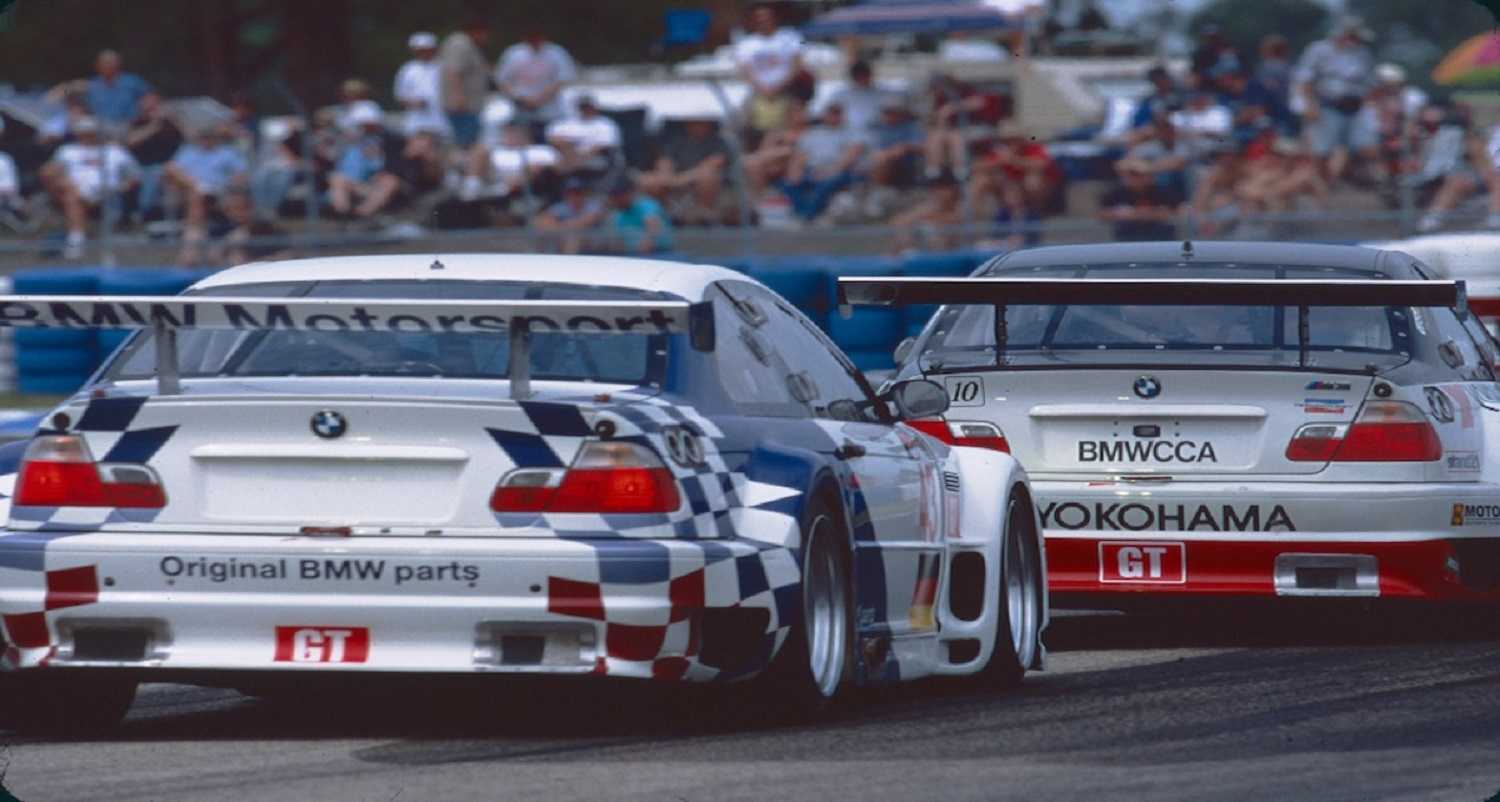
In the second half of the 1990s, dominance was the name of the game for BMW NA in the International Motorsport Association’s GT class. Motorsport manager Erik Wensberg had hired Prototype Technology Group to run BMW NA’s E36 M3 racing cars, and a learning season in 1995 was followed by an incredible win record from 1996 to 1998. Along with winning fully half of all the races contested, the PTG M3 GTs captured the driver’s titles for Pete Halsmer and Bill Auberlen and team/manufacturer’s titles for PTG and BMW of North America.
Despite those accomplishments, PTG got little respect in Munich. “[BMW Motorsport director] Paul Rosche thought we had a hick NASCAR team running our M3 program,” said Rich Brekus, then Head of Product Planning and Strategy at BMW NA. “It was a constant refrain that BMW Motorsport should run it, but I defended [PTG principal] Tom Milner, and Karl-Heinz Kalbfell on the corporate side was supportive.”
In 1999, the E36 M3 was eclipsed by Porsche’s new water-cooled 996, specifically the water-cooled 911 GT3 homologation special and its full-race counterpart, the $270,000 GT3R equipped with a 405-horsepower 3.6-liter engine. The PTG M3s took two early-season wins, but Porsche took six, and the championships.
BMW needed a new car, but the E46 M3 would share many of its predecessor’s disadvantages against the Porsche; namely, more frontal area and aerodynamic resistance, and a 3.2-liter inline six-cylinder engine that put out just 338 horsepower. The engine’s 0.4-liter displacement deficit was significant, Brekus said, because of IMSA’s limits on intake airflow. “Restrictor racing is a displacement game, because the higher the displacement, the earlier you develop torque, and the faster you can come off a corner.”
In 2000, IMSA became the American Le Mans Series, and the PTG E46 M3 GTs won just one race—at tight and twisty Sears Point, a traditional BMW stronghold—while Porsche took the other eleven.
It was a similarly difficult season for the BMW Motorsport Team Schnitzer V12 LMRs. Having dominated Le Mans and the IMSA prototype class in 1999, the V12 LMRs won just two races in 2000 against nine for the Audi R8. Audi was clearly ascendant, and BMW Motorsport shut down its prototype program at the end of the 2000 season.
By then, BMW was racing in Formula One with Williams, and power was shifting within BMW Motorsport in Munich. Kalbfell was losing influence to Mario Theissen, who’d been named co-director with Gerhard Berger in April 1999, Brekus said, and Theissen had very different ideas about how racing should be run worldwide. “Theissen was very much of the opinion that sales subsidiaries like BMW NA should only market motorsport, not run it,” Brekus said. “I basically said we’re not going to do it that way. We have a great race team, and I don’t like the way you guys run racing. You basically freeze everybody out, and you’re not very good with fans. I still had enough support within BMW that I was able to make that stick, but Theissen didn’t like it at all.”
Having ensured the survival of BMW NA’s own racing program with PTG, Brekus and his team knew they needed “a killer M3,” preferably one with a V8 engine rather than the roadgoing M3’s S54 inline six. The idea of a racing V8 had been hatched a few years earlier, when BMW was contemplating a foray into the Indy Racing League as an engine supplier. BMW Motorsport had tested the concept with a V8-powered Riley & Scott prototype in the 1998 World Sportscar series, but the outsourced P62 engine proved fragile. The car won just one race, in pouring rain that Brekus said prevented the car from making enough traction to break the motor.
BMW abandoned the V8 in favor of the V12 engine in its Le Mans Prototype, but it resurrected the configuration for the E46 M3 that would race the American Le Mans Series in 2001. Finally, the M3 would have enough power to compete with Porsche’s GT3R.

Interestingly, the new P60 V8 was designed by Reinhard Könneker, who’d come to BMW from Porsche. In Weissach, Könneker worked on the 917 and other racing projects under Hans Mezger, who’d designed the engine in the GT3R that constituted the M3’s principal rival in ALMS. At BMW, Könneker worked on Formula One engines; like those V10s, the P60 had a cylinder block and heads cast in aluminum at BMW’s state-of-the-art Landshut foundry. Unlike an F1 engine, the P60 had undersquare bore x stroke dimensions of 94 x 72mm, which emphasized torque rather than high engine speeds to help the M3 accelerate off corners, and to optimize performance with the ALMS-mandated air restrictors in place. So configured, the P60 made some 493 horsepower at 8,000 rpm and 354 pound-feet at 6,500 rpm. Its dimensions were more compact than those of the S54 inline six, too, which allowed BMW Motorsport to lay out the cooling system for optimum efficiency—an important advantage in multi-hour ALMS races.
The P60 was a pure racing engine, and it hadn’t been homologated by the FIA for use in production-based racing. In lieu of that, BMW petitioned the governing Automobile Club de l’Ouest (ACO)—which made the rules for the 24 Hours of Le Mans and the ALMS—to allow its use based on Porsche’s use of a full-race engine in the GT3R. As Peter Brock reported in Bimmer magazine, “The ACO had to agree that BMW was also entitled to use a special engine for its proposed ‘limited production’ GT racer in 2001.” To be fully compliant, BMW was required to create a parts fiche for the car and make all parts available, print a sales brochure, and offer the car for sale on three continents. The ACO’s intention, Brock noted, was to give Porsche some real competition in both the ALMS and the 24 Hours of Le Mans in 2001.
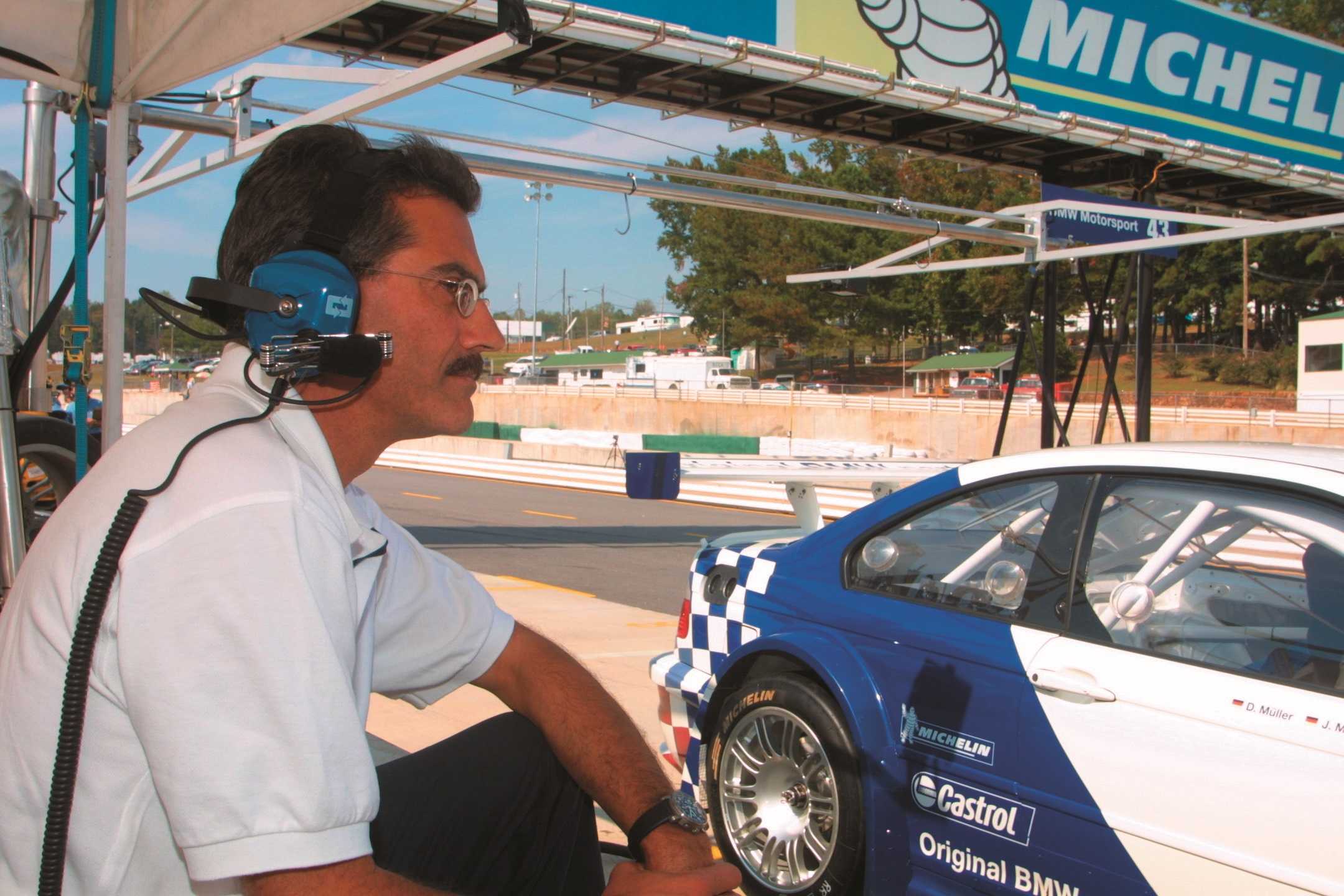
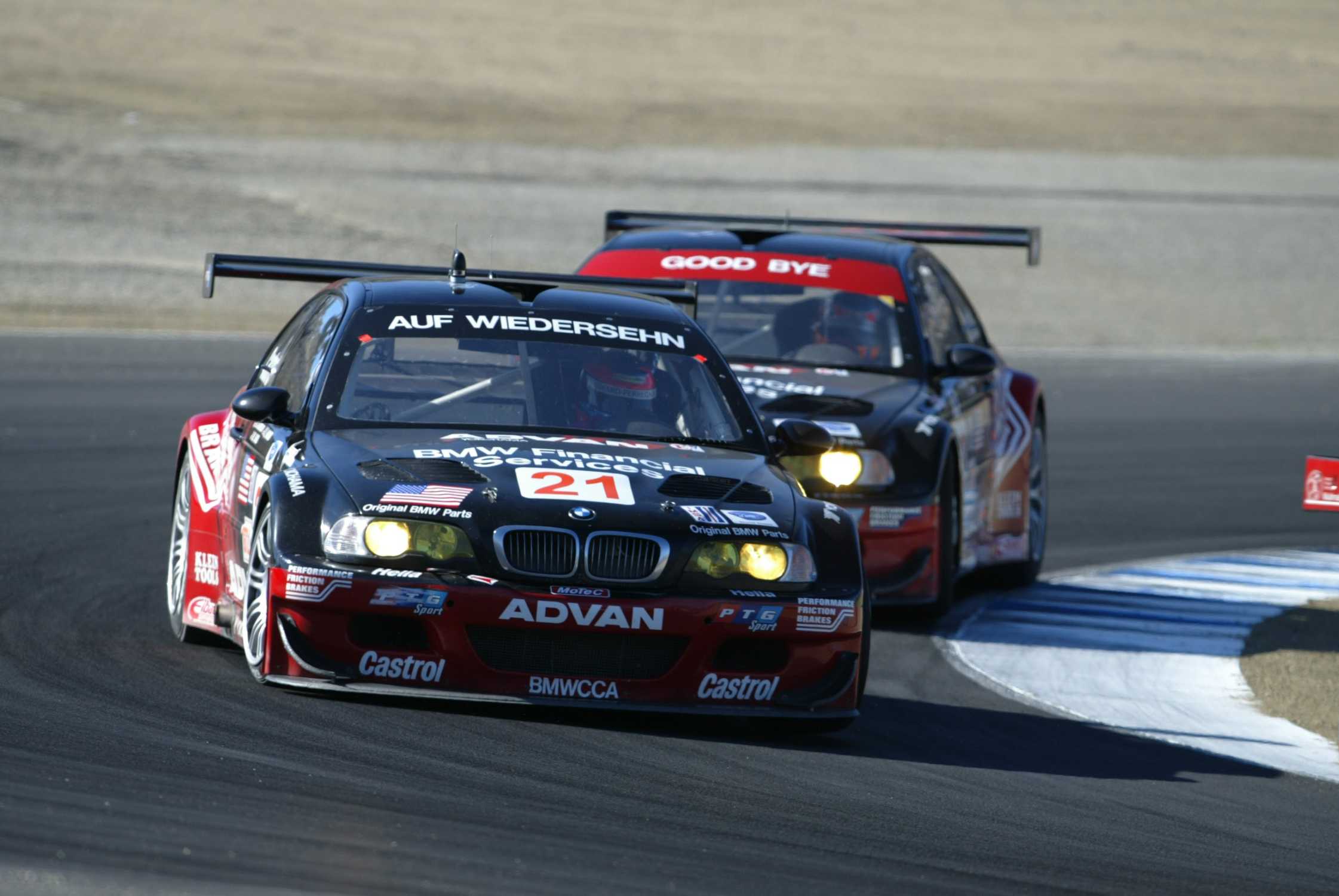
Just as interesting was BMW Motorsport’s decision to give PTG some real competition by fielding its own Team Schnitzer cars in ALMS GT for 2001. “Theissen had agreed to do the V8 M3, but he didn’t think PTG was capable of developing the car and that Schnitzer needed to run it,” Brekus said. “I said, ‘All right, but we’re keeping PTG, and you have to supply the exact same cars to PTG that you supply to Schnitzer.’ They agreed, and so did Albert Biermann, who was responsible for all non-F1 racing.”
The Schnitzer team would have an obvious advantage in being closer to BMW Motorsport than PTG, and despite the assurances given to Brekus it would have an equipment advantage, too, at least initially. For the first four races, only the Team Schnitzer cars would be powered by the P60 V8, while PTG made do with the S54 inline six until the series reached Sears Point for round five in July. Adding to PTG’s potential disadvantage, the team ran on Yokohama tires while Schnitzer used Michelin, which also supplied BMW in Formula One and was considered the dominant force in race tire development.
The P60 V8 wasn’t ready for the first round of the 2001 season at Texas World Speedway on March 4, so the two PTG entries and the sole BMW Motorsport Team Schnitzer car ran with the well-established six-cylinder engine developed by PTG’s Brian Krem (and which Team Schnitzer purchased from PTG for that purpose). The Alex Job Porsches finished 1-2, but PTG’s Hans Stuck and Boris Said took third, with Team Schnitzer car driven by Jörg Müller and JJ Lehto in fifth and the second PTG car of Bill Auberlen and Niclas Jönsson in seventh.
Two weeks later, the 12-hour race at Sebring saw the Alex Job Porsches again finish 1-2, but this time the third step of the podium was occupied by the Team Schnitzer’s Lehto and Müller—now racing with the P60 V8 in what BMW Motorsport considered a test for the new engine. Lehto and Müller might have won but for an eleventh-hour pit stop to change the brakes; they’d been controlling the race since lap four, and they set a GT lap record during the race. The fastest PTG entry of Said, Stuck, and Peter Cunningham, meanwhile, finished six laps behind in fourth, while the other PTG car as well as a second Team Schnitzer M3 DNF’d.
With that, the Team Schnitzer BMWs flew across the Atlantic for two rounds of the European Le Mans Series, for which both cars would be equipped with P60 V8 engines. Following a double DNF at Donington, the Schnitzer cars scored a promising 1-2 finish at Jarama before returning to the US.
At Sears Point on July 22, all four M3 GTRs would be equipped with P60 V8s, setting up a battle royale against theoretically equal teams. “[PTG boss] Tom Milner had a lot to prove, and [Team Schnitzer’s] Charly Lamm had a lot to prove,” Brekus said. “The expectation was that PTG wasn’t the same caliber as Schnitzer, and that Schnitzer would always win.”
Schnitzer did indeed win at Sears Point, beating the top PTG car by a lap. Not far behind, the second PTG car was set to finish third until Hans Stuck was tapped into a spin by Schnitzer driver Frederick Ekblom in the final corner, relegating him to fourth. It was emblematic of the rivalry between the two teams, and their drivers. “You can’t put two roosters in the henhouse,” said PTG driver Bill Auberlen. “All we wanted to do was beat them.”
“Charly was telling [the Schnitzer drivers] to do whatever it takes, and Tom was telling his drivers to do what it takes,” Brekus said. “And if you’re Boris or Hans, you’re going to show these guys. Our drivers tended to be older and more experienced, while the Schnitzer team had younger BMW factory drivers. In endurance racing, a lot of times you win races by knowing how to pick your fights and stay out of trouble, not by being fastest around the track, and Boris and Hans were really good at that.”
The Schnitzer M3’s win had implications that went beyond the BMW pits. Schnitzer driver Dirk Müller had driven the second M3 around Sears Point two seconds faster than he’d lapped the previous season in a Porsche, which set alarm bells ringing in the Porsche garage. Peter Brock reported that Porsche “called in the generals,” meaning its best engineers, for the next race at Portland.
Despite Porsche’s best efforts, and those of Team Schnitzer, PTG’s Stuck and Said won at Portland on August 5. Two weeks later, the Schnitzer team would have its revenge, going 1-2 at Mosport after collisions with both PTG cars. Two more Schnitzer 1-2s would follow at Mid-Ohio and Laguna Seca, raising suspicions that Schnitzer engineers were tampering with the engine management software used by the PTG cars.
“I don’t think so,” Brekus said. “Honestly, a lot of the difference in performance between the two cars was the tires. Yokohama was a fantastic supporter of ours, but for sure the Michelin race tires were better.”
The final showdown was set for October 6, and the 1000km (10 hour) Petit Le Mans race at Road Atlanta. The race was doubly important, as a win would guarantee entry at the 24 Hours of Le Mans the following season.
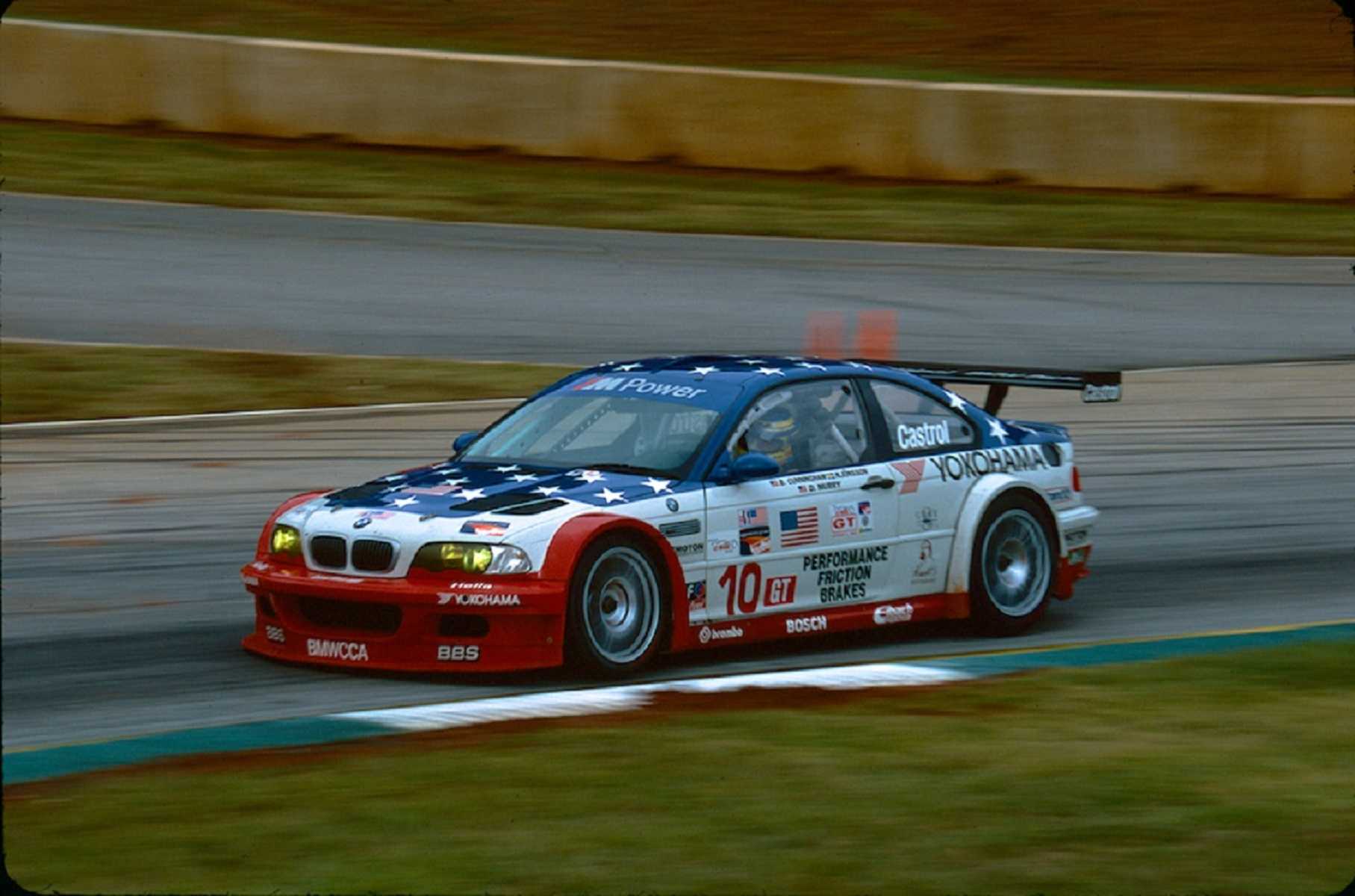
It nearly didn’t happen. On September 11, terrorists hijacked jetliners to attack the World Trade Center and the Pentagon, and much of normal life came to a halt. After much debate, Petit Le Mans went on as scheduled, but every car was decked out with an American flag sticker to show their support of the host country. Milner went a step further with the Team PTG M3s, replacing the Black/red/white Yokohama livery for a field of blue with white stars on the hood, roof and deck lid that turned the entire car into an American flag.
It was an emotional race for all concerned, but especially for US-based Team PTG and its drivers. The lead PTG car driven by Stuck, Said, and Bill Auberlen had been running neck-and-neck with the Team Schnitzer M3 of Dirk Müller and Jörg Müller throughout the race, but it all fell apart for the Schnitzer car in one of the final pit stops. “The driver is allowed to help the next driver get into the car and get his seat belts fastened, but he can’t work on the car,” Brekus said. “Jörg Müller decided to clean the windshield, so they got a drive-through penalty.”
PTG won by a lap over the nearest Schnitzer car, with the fastest Porsche third and the second Schnitzer M3 in fourth. (The other two PTG entries DNF’d.) “It was unbelievable,” Brekus said. “It was a hard-fought race, and I’ll have to give Charly credit. He was a racer, first and foremost, and he came over and congratulated Tom sincerely. By then, he’d recognized that PTG wasn’t some bunch of buffoons.”
BMW Motorsport Team Schnitzer won the GT championship, ahead of the Alex Job Racing Porsche team and PTG in third. Schnitzer’s Jörg Müller won the driver’s title, with Said the top PTG driver in fifth.

It had been a fantastic season for BMW, and it should have been followed by another fantastic season in 2002. Unfortunately, on November 25, 2001 the ACO issued a ruling declaring the P60 V8 illegal unless BMW built 1,000 examples. That number fell short of the 1,868 911 GT3s built by Porsche from 1999 to 2001, but it was far more than the 163 full-race GT3Rs, and well in excess of the number of roadgoing M3 GTRs that would have been feasible for BMW to build. Like the racing M3 GTR, the roadgoing version had been designed by Albert Biermann, and ten prototypes had been built in anticipation of a limited production run. In accordance with ACO requirements, the roadgoing M3 GTR had been shown at Petit Le Mans, where a price tag of €250,000 was announced.
In the wake of the ACO’s decision, BMW killed the V8-powered M3 GTR road car program, and it withdrew from ALMS racing for 2002. Porsche would go undefeated that year, and every season until 2006, when Risi Ferrari finally won four races and the GT2 championship.
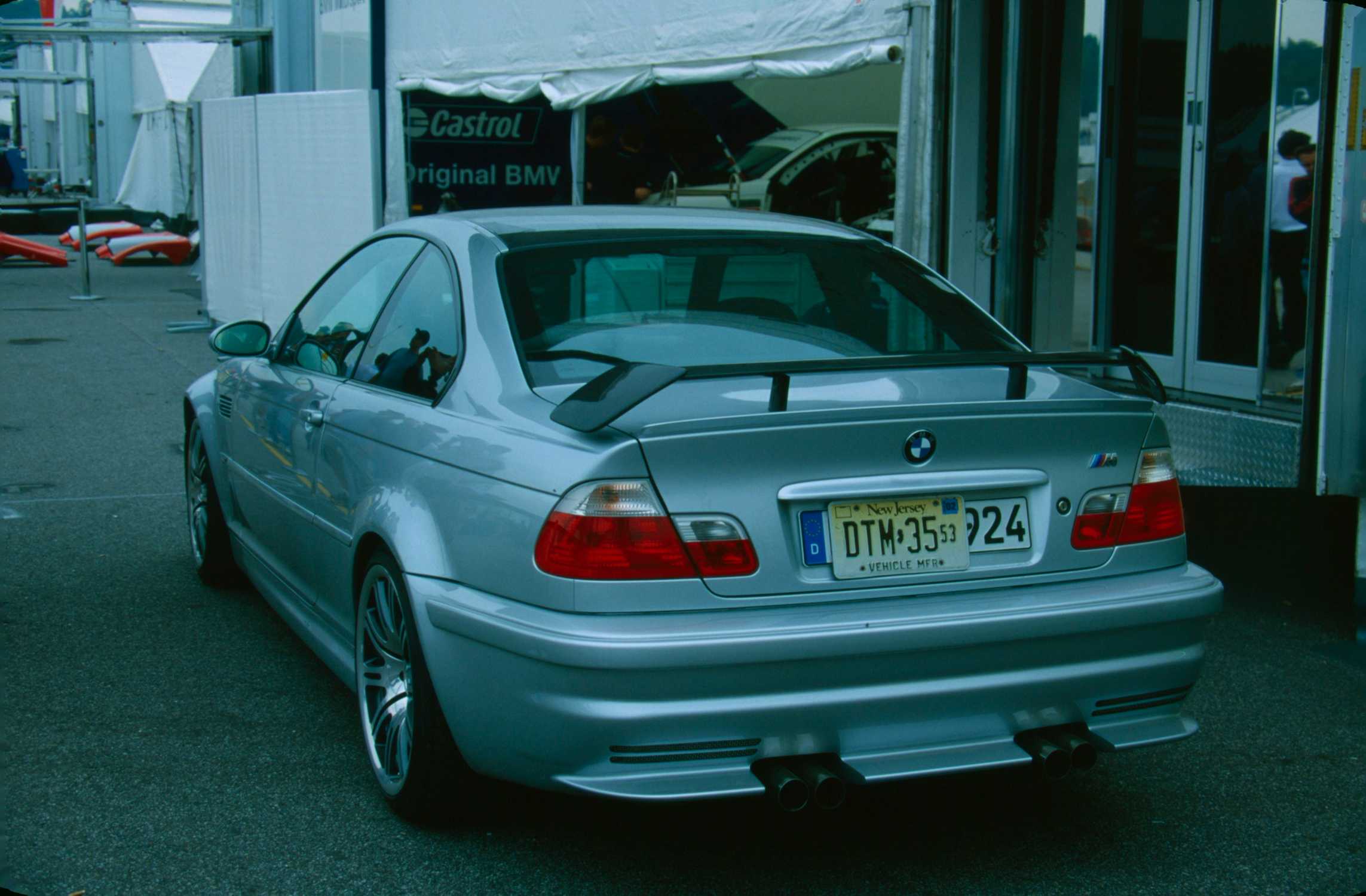
In 2004, BMW brought its racing M3 GTRs out of mothballs, swapped the V8 engines for the original 3.2-liter inline sixes, and promptly won the Grand-Am GT championship. “The cars were then banned by Grand-Am because the chassis was too trick, so they were parked once again for 2005,” said Larry Koch, who ran BMW of North America’s motorsport program in 2005 and 2006 and then again in 2011 and 2012. “In 2006, we returned to the ALMS with the 2001 M3 GTR, this time with a 3.4-liter engine and a weight reduction. They were five years old, but they were fairly competitive, finishing on the podium at Lime Rock but otherwise having a midpack season. It’s kind of funny that the two PTG M3s won championships in ALMS and Grand-Am and were subsequently banned by both series!”
BMW wouldn’t return to ALMS until 2009, when it campaigned the E92 M3 GT2 with Team Rahal Letterman Lanigan. Like its 2001 M3 GTR counterpart, that car was powered by an all-new P65 4.0-liter V8 engine based on the roadgoing S65 V8. In 2010 and 2011, the E92 M3 GT2 would beat Porsche once again, a decade after the E46 M3 GTR had done the same.
“The M3 GTR was the best-handling GT car ever,” said Auberlen. “The engine was so light, and so small, and the way it put power down was exactly matched to the tire. You were right on the edge of adhesion all the way up the powerband, and it drove away like a rocket.”
It still does. The Petit Le Mans-winning PTG M3 GTR was restored by BMW Classic USA in 2015, and it makes regular appearances at vintage races and charity events throughout the US. Wherever it goes, it reminds spectators of a fantastic ALMS season in 2001, and of PTG’s incredible victory at Petit Le Mans in the wake of 9/11.